
Artificial Intelligence (AI) is rapidly changing the healthcare industry. From improving patient care to helping doctors diagnose diseases faster, the use of AI in healthcare is becoming more important each year. Hospitals, clinics, medical companies, and medical researchers are using AI-powered systems to increase accuracy, reduce costs, and save lives.
In recent years, AI has moved beyond simple automation and entered advanced areas such as robotic surgery, predictive analytics, virtual health assistants, and personalized medicine. While there are many advantages of AI in healthcare, there are also some challenges and concerns. Understanding both the benefits and the risks of AI in healthcare is essential for the future of medicine.
What is AI in Healthcare?
AI in healthcare refers to the use of machine learning, deep learning, natural language processing, and other intelligent technologies to perform tasks that normally require human intelligence in the field of medicine. These systems can analyze medical data, identify patterns, and support clinical decision-making through data.
The uses of AI in medicine is growing rapidly because healthcare generates massive amounts of data every day. AI can process this information much faster than humans and provide valuable insights to doctors and healthcare professionals for further research.
Major Use of AI in Healthcare
The modern use of AI in healthcare can be seen in many different areas. Below are some of the most important applications.
1. Disease Diagnosis
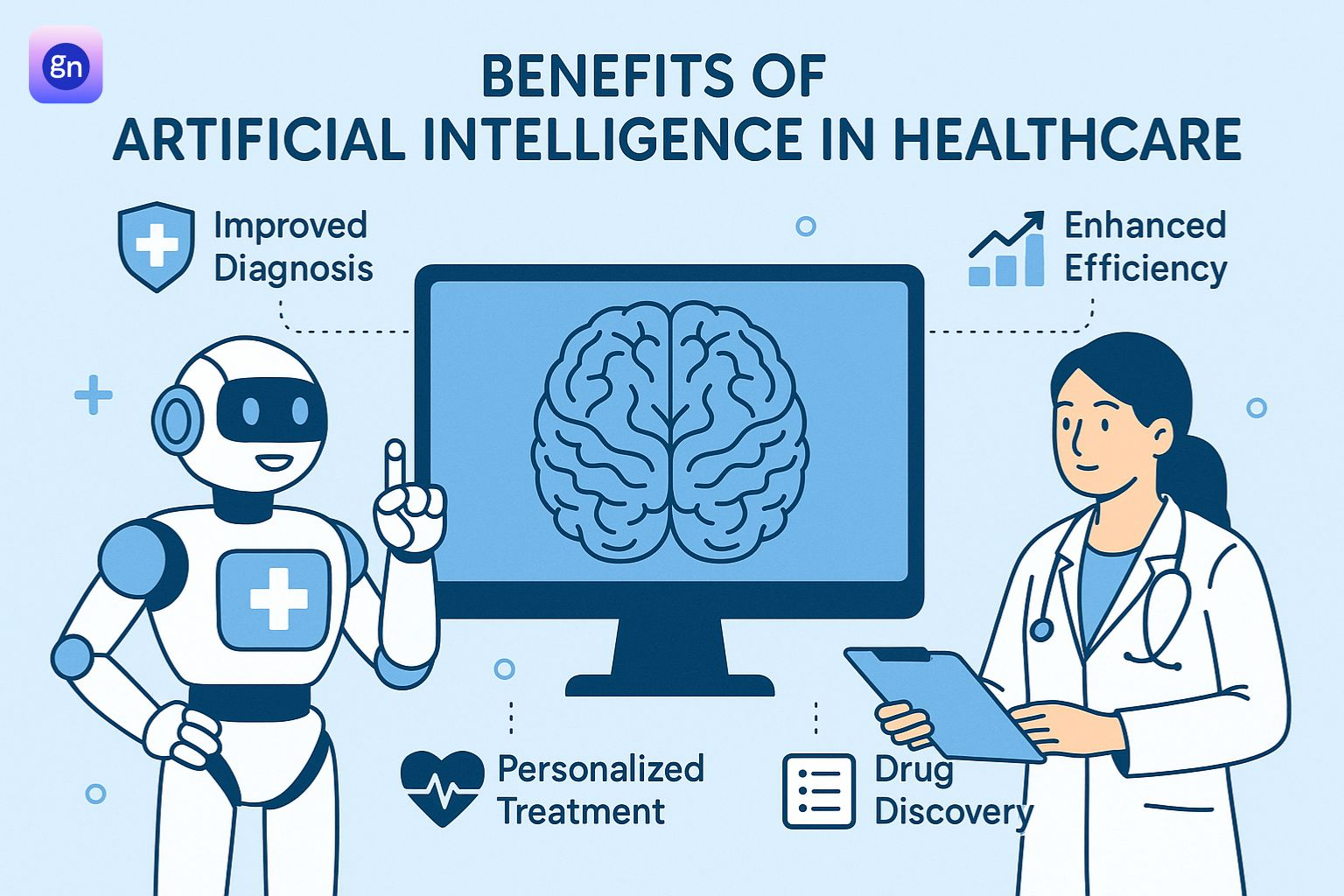
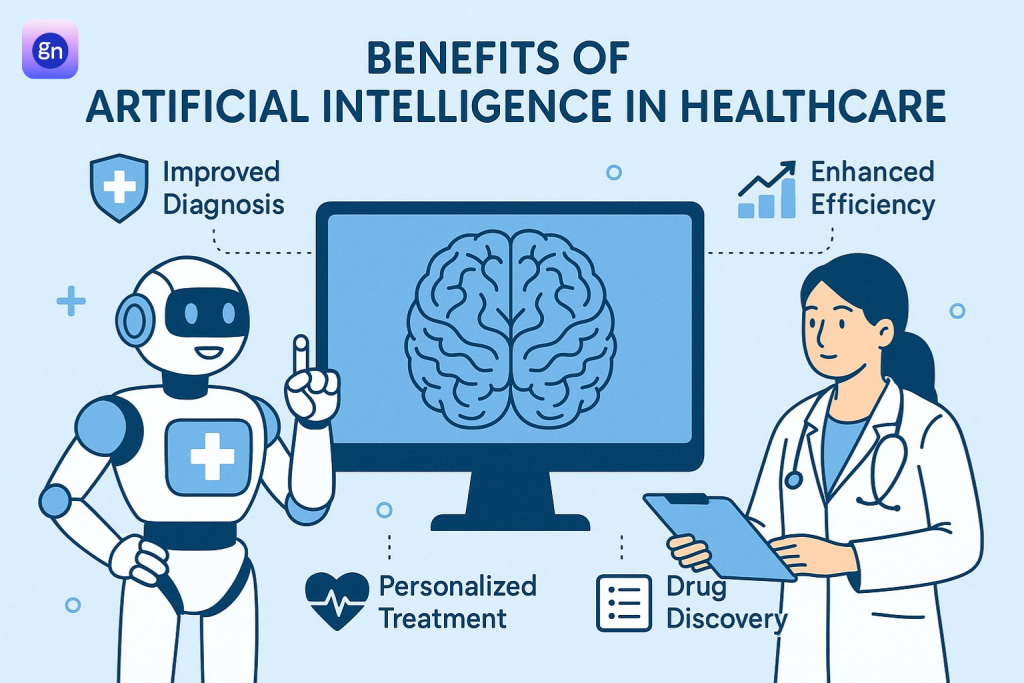
AI systems can analyze medical images such as X-rays, CT scans, and MRIs to detect diseases like cancer, pneumonia, and heart conditions. AI-powered diagnostic tools help doctors identify illnesses at an early stage, improving treatment success rates.
For example, AI algorithms can detect tiny abnormalities in medical scans that may be difficult for the human eye to notice. This improves diagnostic accuracy and reduces medical errors.
2. Personalized Treatment Plans
One of the most important uses of AI in medicine is personalized healthcare. AI can study a patient’s medical history, genetics, lifestyle, and symptoms to recommend customized treatment plans according to the past record.
This approach is especially useful in cancer treatment, where AI helps doctors select therapies that are more likely to work for specific patients.
3. Virtual Health Assistants
AI-powered chatbots and virtual assistants are helping patients schedule appointments, receive medication reminders, and access healthcare information anytime. These systems improve patient engagement and reduce the workload of healthcare staff.
Virtual assistants also support telemedicine services, allowing patients to communicate with healthcare providers remotely.
4. Drug Discovery and Research
Developing new medicines traditionally takes years and costs billions of dollars. AI accelerates drug discovery by analyzing large datasets and identifying potential compounds for treatment.
During global health crises, AI has helped researchers quickly study viruses and identify possible treatments, making medical research faster and more efficient.
5. Robotic Surgery
Robotic surgical systems powered by AI assist surgeons during complex procedures. These robots improve precision, reduce human error, and allow minimally invasive surgeries.
Patients often experience less pain, smaller scars, and faster recovery times after AI-assisted surgeries.
6. Predictive Analytics
Predictive analytics is another major use of AI in healthcare. AI systems can predict disease outbreaks, identify high-risk patients, and help hospitals manage resources efficiently.
For example, AI can monitor patient data and alert doctors before a patient’s condition becomes critical.
Advantages of AI in Healthcare
There are numerous advantages of AI in healthcare that are transforming patient care and medical operations.
Improved Accuracy
AI systems reduce diagnostic mistakes by analyzing medical data with high precision. This leads to more accurate diagnoses and better treatment outcomes.
Faster Decision-Making
Doctors can use AI tools to access quick insights by just looking at the data studied by AI and recommendations, helping them make informed decisions faster.
Reduced Healthcare Costs
Automation reduces administrative work and improves efficiency, lowering operational costs for hospitals and healthcare facilities.
Better Patient Care
AI allows healthcare providers to monitor patients continuously and provide personalized care plans, improving overall patient satisfaction.
Early Disease Detection
AI can identify or give symptoms of diseases at early stages when treatment is more effective. Early diagnosis can save lives and reduce the treatment expenses of the patient.
Enhanced Medical Research
AI accelerates clinical trials and medical research by analyzing complex datasets in a shorter time, which requires more time for humans.
Increased Efficiency
Routine tasks such as data entry, appointment scheduling, and billing can be automated, allowing healthcare workers to focus more on patient care.
Disadvantages of AI in Healthcare
Despite the many benefits, there are also several disadvantages of AI in healthcare that must be considered.
High Implementation Costs
AI systems require significant investment in technology, infrastructure, and training. Small healthcare organizations may struggle to afford these solutions. They also incur huge operational costs.
Data Privacy Concerns
Healthcare data is highly sensitive. AI systems rely on large amounts of patient information, raising concerns about data security and privacy breaches.
Lack of Human Touch
AI cannot replace human empathy and emotional understanding. Patients often prefer personal interaction with healthcare professionals rather than AI robots.
Dependence on Technology
Overreliance on AI systems may reduce critical thinking among healthcare professionals and create challenges if systems fail. There is a high risk of being fully dependent on an electronic automatic system.
Risk of Errors
Although AI improves accuracy, it is not perfect. Incorrect data or biased algorithms can lead to inaccurate recommendations and medical mistakes.
Job Displacement Concerns
Automation may reduce the need for certain administrative and repetitive healthcare jobs, creating concerns about employment.
Ethical Challenges
AI raises ethical questions regarding decision-making, patient consent, and accountability in medical treatment.
Future of AI in Healthcare
The future of the use of AI in healthcare looks promising. As technology advances, AI systems will become more accurate, affordable, and accessible.
In the coming years, AI is expected to play a larger role in:
- Remote patient monitoring
- Wearable health devices
- Precision medicine
- Mental health support
- Genomic analysis
- Automated healthcare administration
AI will likely work alongside healthcare professionals rather than replacing them completely. Human expertise combined with AI intelligence can create a more efficient and patient-focused healthcare system.
Conclusion
The use of AI in healthcare is revolutionizing modern medicine by improving diagnosis, treatment, patient care, and medical research. The growing use of AI in medicine demonstrates how technology can support healthcare professionals and enhance patient outcomes.
There are many advantages of AI in healthcare, including increased accuracy, faster decision-making, cost reduction, and personalized care for each patient. However, healthcare providers must also address the disadvantages of AI in healthcare, such as privacy concerns, high costs, and ethical challenges.
As AI technology continues to evolve, it will become an even more essential part of the healthcare industry. By balancing innovation with ethical responsibility, healthcare organizations can use AI to create safer, smarter, and more effective medical systems for the future.