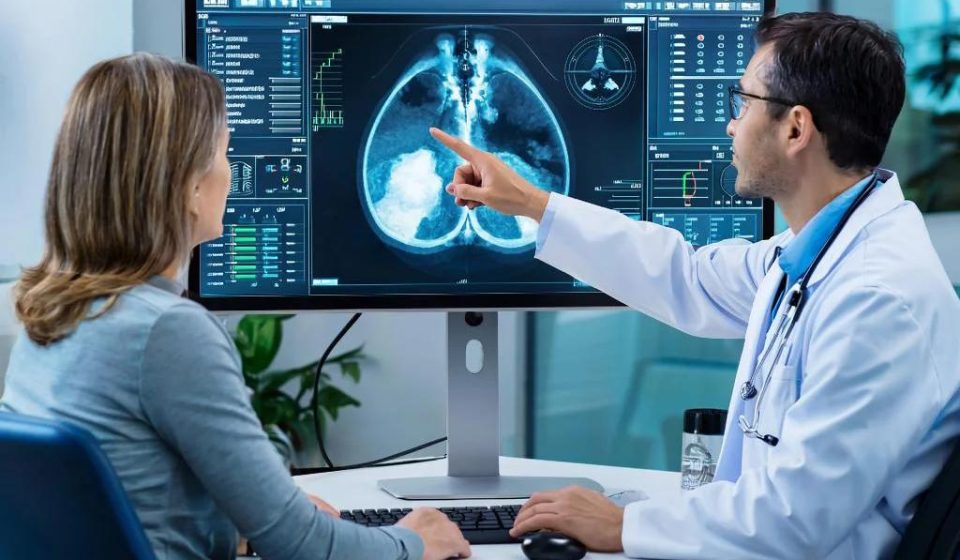

Artificial intelligence (AI) is changing how healthcare professionals analyze medical report, monitor patients, discover medicines, and manage healthcare services. From helping doctors examine medical images to supporting remote patient monitoring, AI is becoming an important technology in the healthcare sector.
The use of AI in healthcare is not limited to hospitals or research laboratories. It also includes digital health applications, administrative automation, medical research, and tools that help healthcare professionals make better-informed decisions.
However, AI in healthcare comes with important challenges. Patient privacy, inaccurate predictions, biased data, and the need for human supervision must all be considered before these technologies are adopted.
In this guide, we will explore how AI works in healthcare, its practical applications, major benefits, limitations, and what patients and healthcare providers should understand before using AI-powered tools.
What Is Artificial Intelligence in Healthcare?
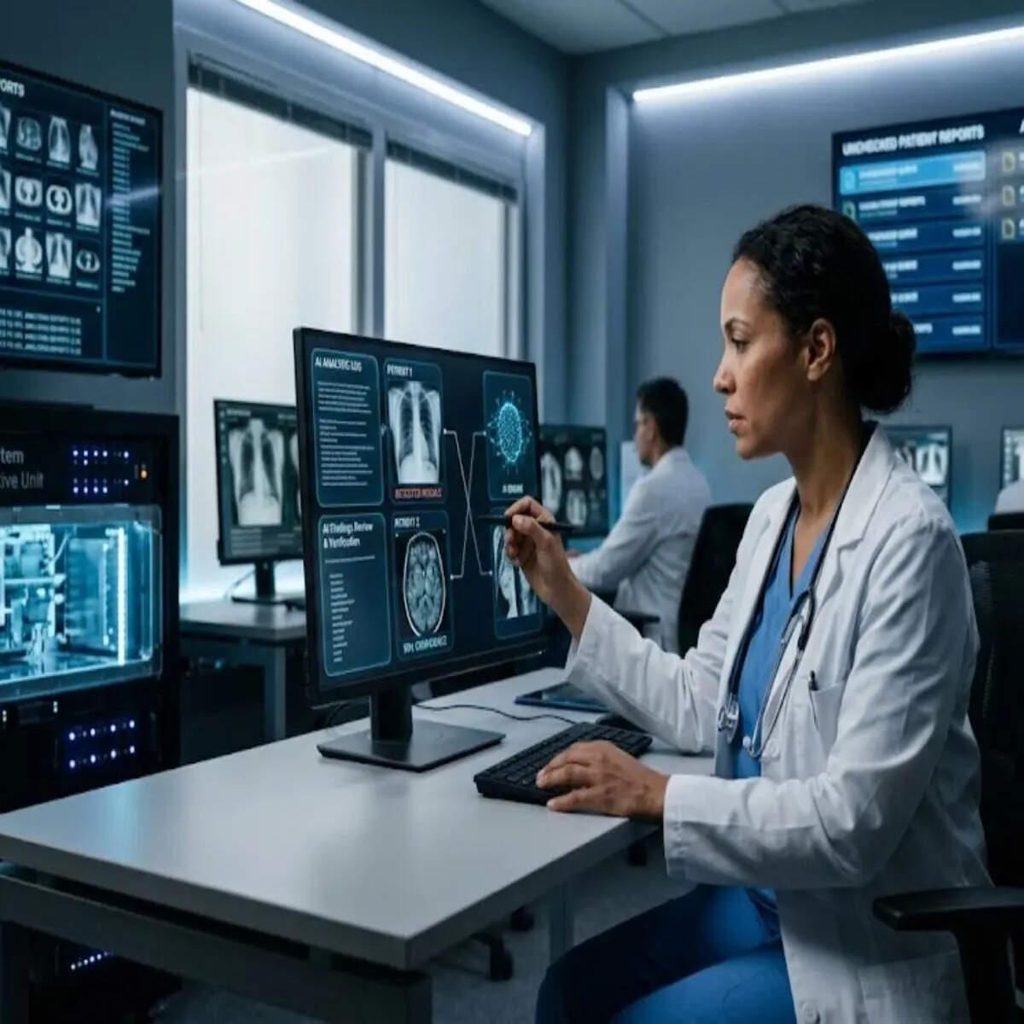
Artificial intelligence in healthcare refers to the use of AI that analyzes information, recognizes patterns, generates predictions, or assists with tasks related to healthcare. These systems may use machine learning, deep learning, natural language processing, computer vision, and other AI techniques.
For example, an AI system can analyze a medical image and highlight an area that may require closer examination. A healthcare professional can then review the result and decide whether further investigation is necessary.
AI can also help organize medical records, summarize clinical documents, identify patterns in research data, and support certain administrative tasks.
Important: AI supports healthcare professionals, but it does not automatically replace medical training, clinical judgment, or the relationship between a patient and their healthcare provider.
How Is AI Used in Healthcare?
AI has several applications across healthcare. Its usefulness depends on the specific task, the quality of the available data, and whether the system has been appropriately tested for its intended purpose.
1. Medical Diagnosis and Disease Detection
One of the most widely discussed applications of AI in healthcare is medical image analysis and disease detection.
AI systems can be trained to identify patterns in medical images, laboratory results, and other clinical information. In appropriate settings, these systems may help healthcare professionals identify findings that deserve additional attention.
Examples include:
- Analyzing X-rays and CT scans to highlight potentially abnormal areas.
- Supporting the examination of retinal images for signs of diabetic eye disease.
- Helping clinicians review certain mammograms and other medical images.
- Identifying patterns in medical data that may indicate a need for further investigation.
The US Food and Drug Administration (FDA) maintains a list of AI-enabled medical devices authorized for marketing in the United States. The list demonstrates that AI is already used in specific medical applications, although authorization for one purpose does not mean a system is suitable for every patient or clinical situation.
Source: FDA — AI-Enabled Medical Devices
AI-generated findings must be interpreted in context. A system can miss an abnormality, produce a false alert, or perform differently when used with data that differs from its training data.
2. Personalized Treatment Planning
Patients with the same condition may respond differently to treatment. Their age, medical history, other health conditions, lifestyle, and individual circumstances can all affect healthcare decisions.
AI can help clinicians analyze multiple sources of information to identify patterns that may be relevant to treatment planning.
Potential applications include:
- Supporting risk assessment using clinical records.
- Helping researchers study differences in treatment responses.
- Organizing patient information for clinical review.
- Supporting the evaluation of possible treatment options.
For example, a clinical decision-support system may help a healthcare professional review a patient’s medical history and relevant test results before considering the next steps in care.
However, an AI recommendation is not automatically the best option for an individual. Treatment decisions should account for clinical evidence, patient preferences, possible side effects, and professional judgment.
3. Medical Imaging and Radiology
Medical imaging is an important area of AI development because radiology departments often process large numbers of images.
Computer vision systems can analyze image patterns and, in certain approved or appropriately validated applications, help identify findings that require further review.
AI tools may help with:
- Highlighting suspicious areas in medical scans.
- Measuring structures in images.
- Improving some aspects of image reconstruction.
- Prioritizing selected cases for clinical review.
- Assisting with repetitive image-processing tasks.
Consider a hospital that receives many medical scans every day. A suitable AI tool may flag a scan for earlier review based on a defined finding. The radiologist remains responsible for interpreting the scan and determining the appropriate clinical response.
AI performance varies across tools, medical conditions, equipment, and patient populations. Healthcare organizations must evaluate whether a system is reliable in their own clinical environment.
4. AI-Powered Virtual Health Assistants and Chatbots
AI chatbots can help patients find general health information, understand healthcare service options, and navigate administrative processes.
Depending on how they are designed, virtual assistants may help users:
- Find clinic opening hours and contact details.
- Understand appointment procedures.
- Receive appointment reminders.
- Locate educational material reviewed by healthcare professionals.
- Navigate a hospital’s services.
- Obtain basic information about preparing for a scheduled appointment.
For example, a hospital chatbot might explain how to book a consultation or direct a patient to the appropriate department.
These tools must have clear limitations. General-purpose chatbots can generate inaccurate information, misunderstand symptoms, or present uncertain statements confidently.
A chatbot should not be treated as a substitute for professional diagnosis, emergency assessment, or individualized treatment advice. Healthcare providers should also make it clear when a patient is interacting with AI rather than a human professional.
5. Drug Discovery and Medical Research
Developing a new medicine requires extensive research, testing, and evaluation. AI can help researchers analyze biological data and investigate potential drug candidates.
Possible applications include:
- Screening large collections of chemical compounds.
- Predicting certain molecular properties.
- Studying biological relationships.
- Analyzing scientific publications.
- Identifying potential research directions.
- Supporting the design and analysis of research studies.
AI may help researchers prioritize which possibilities to investigate, potentially reducing time spent on some early-stage research tasks.
However, a promising AI prediction does not prove that a drug is safe or effective. Candidate medicines still require appropriate laboratory studies, clinical trials, regulatory review, and ongoing safety monitoring.
6. Remote Patient Monitoring
Remote patient monitoring uses technology to collect or transmit information about a person’s health outside a traditional healthcare facility.
Depending on the device and application, AI may analyze information from wearable devices, home-monitoring equipment, or other digital health systems.
Examples include:
- Analyzing heart-rate patterns from compatible devices.
- Reviewing continuous glucose monitoring data in systems designed for diabetes management.
- Identifying changes in selected physiological measurements.
- Helping healthcare teams prioritize certain monitoring alerts.
For instance, a remote monitoring system may flag a pattern that meets predefined criteria so a healthcare professional can review it.
Not every alert indicates a medical emergency, and the absence of an alert does not guarantee that a person is healthy. Device accuracy, connectivity, data quality, and the patient’s circumstances all matter.
People should follow the instructions provided by their healthcare team rather than relying exclusively on wearable devices or automated alerts.
7. Hospital Administration and Workflow Automation
AI can also help with tasks that support healthcare delivery without directly making medical decisions.
Administrative applications may include:
- Organizing appointment requests.
- Summarizing selected documents.
- Helping classify incoming administrative messages.
- Supporting medical transcription and documentation workflows.
- Forecasting demand for certain hospital services.
- Helping staff locate information within approved internal systems.
For example, an AI-assisted scheduling system might help a hospital identify appointment conflicts or organize requests for staff review.
These applications can be useful because healthcare professionals often spend considerable time on documentation and coordination. Nevertheless, automated records and summaries must be checked for errors, and access to patient information must be properly controlled.
Benefits of Use of AI in Healthcare
When designed, tested, and implemented appropriately, AI can offer several potential benefits.
Improved support for clinical decisions
AI can analyze large datasets and highlight patterns that may be difficult to identify manually. This can provide additional information for qualified healthcare professionals.
More efficient workflows
Automation may reduce repetitive administrative work and help staff organize information more efficiently.
Support for medical research
AI can assist researchers in exploring large datasets, reviewing literature, and prioritizing research questions.
More flexible access to health information
Well-designed digital assistants can help people find general health education and navigate healthcare services, including outside normal office hours.
Support for selected monitoring tasks
Certain validated systems can analyze measurements over time and help identify changes that require professional review.
These benefits are not guaranteed. Results depend on the system’s design, clinical setting, implementation, and ongoing evaluation.
Challenges and Risks of AI in Healthcare
AI can create new risks if healthcare organizations adopt it without appropriate safeguards.
1. Patient Privacy and Data Security
Healthcare information can include medical histories, diagnoses, test results, prescriptions, and other sensitive personal details.
AI systems may require access to some of this information to perform their intended tasks. If data is collected, stored, shared, or processed improperly, patients may face privacy risks.
Healthcare organizations should:
- Limit data access to authorized users.
- Use appropriate encryption and security controls.
- Follow applicable privacy and healthcare regulations.
- Evaluate the data-handling practices of AI vendors.
- Establish clear retention and deletion policies.
- Avoid entering identifiable patient information into unapproved AI tools.
Practical tip: Never upload patient records, medical reports, photographs, or identifying information to a public AI chatbot unless the use has been appropriately authorized and the platform is approved for that information.
2. Bias and Unfair Results
AI systems learn patterns from data. If the training data does not adequately represent the people who will use a system, its performance may differ across populations.
For example, a model developed using data from one population may not perform equally well when applied to patients with different characteristics or in another healthcare setting.
Healthcare organizations should evaluate performance across relevant patient groups and monitor systems after deployment.
3. Inaccurate or Misleading Outputs
AI systems can produce incorrect predictions, miss important information, or generate plausible-sounding but false statements.
In healthcare, an error can have serious consequences if it influences a medical decision without proper review.
AI outputs should be checked against reliable evidence and interpreted by appropriately qualified professionals. The level of supervision should reflect the risk associated with the system’s intended use.
4. Cost and Technical Requirements
Implementing AI may require software licenses, secure infrastructure, staff training, integration with existing systems, and ongoing maintenance.
Smaller clinics may find these requirements difficult to manage.
Before investing, healthcare organizations should identify a specific problem, estimate the total cost, evaluate expected benefits, and test whether the system works reliably in their environment.
5. Accountability and Human Oversight
When an AI-assisted process produces a harmful or incorrect result, organizations need clear procedures for review, escalation, and accountability.
Healthcare providers should understand what a system can and cannot do. Patients should also have appropriate ways to ask questions and seek human assistance.
The World Health Organization emphasizes ethics, human rights, transparency, accountability, and appropriate governance in its guidance on AI for health.
Source: WHO — Ethics and Governance of Artificial Intelligence for Health
Real-World Example: How a Hospital Might Use AI
The following example is illustrative. It describes a possible workflow, not a claim about a particular hospital.
Imagine a hospital introducing an AI-assisted medical imaging tool.
Step 1: A patient receives a scan. A clinician orders the scan as part of the patient’s medical evaluation.
Step 2: The AI system analyzes the image. If the tool is designed and validated for that task, it may highlight a finding or identify an area for closer examination.
Step 3: A qualified professional reviews the result. The radiologist considers the scan, the AI output, and the patient’s clinical information.
Step 4: The healthcare team makes a decision. Any diagnosis, additional testing, or treatment decision is based on appropriate clinical assessment rather than the AI output alone.
Step 5: The hospital monitors performance. Staff evaluate errors, reliability, workflow effects, and any differences in performance across patient groups.
This example shows how AI can contribute to a healthcare process while preserving professional responsibility and human oversight.
AI in Healthcare in Developing Countries
AI may offer opportunities for healthcare systems in countries with limited resources, including Nepal. However, successful adoption requires attention to local needs and practical constraints.
Potential applications include:
- Translating approved health education into local languages.
- Supporting administrative workflows in clinics.
- Helping organize medical information.
- Assisting with selected remote-monitoring programs.
- Supporting public health research and analysis.
- Helping healthcare workers access relevant educational resources.
These are potential applications, not proof that a particular AI system will improve healthcare outcomes in Nepal.
Implementation challenges may include limited internet connectivity, insufficient digital infrastructure, a shortage of technical support, language differences, privacy concerns, and limited local validation data.
Healthcare providers should evaluate any AI tool against local clinical requirements, applicable regulations, available resources, and the needs of the communities they serve.
AI should complement investment in qualified healthcare workers, reliable medical equipment, and accessible health services rather than be treated as a replacement for them.
The Future of AI in Healthcare
AI development is likely to expand across medical research, imaging, clinical documentation, remote monitoring, and other healthcare applications.
Several areas deserve particular attention.
More specialized AI systems
Healthcare organizations may increasingly use systems designed for specific, clearly defined tasks rather than relying on general-purpose AI for every activity.
Better integration with healthcare workflows
AI tools may become more closely integrated with medical records and clinical software, provided privacy, interoperability, safety, and usability requirements are met.
More careful evaluation and regulation
As AI becomes more common in healthcare, testing, monitoring, transparency, and accountability will remain important. Requirements differ by country and by the intended use of each system.
Greater attention to patient privacy
Privacy-preserving approaches, secure infrastructure, and stronger data governance may help organizations manage the risks of using sensitive health information.
Continued need for human judgment
Even as AI capabilities improve, healthcare decisions will still require attention to individual circumstances, uncertainty, patient preferences, and professional responsibility.
The future value of AI in healthcare will depend not only on technical progress but also on whether systems are safe, useful, fair, and trusted by patients and healthcare professionals.
Conclusion
The use of AI in healthcare is creating new opportunities to support medical imaging, research, patient monitoring, clinical workflows, and access to health information.
However, the technology also introduces important challenges involving patient privacy, bias, reliability, cost, and accountability.
The most responsible approach is to use AI for clearly defined tasks, evaluate its performance, protect sensitive information, and maintain appropriate human oversight.
For patients, AI-generated health information should be treated as a source of general information rather than a substitute for professional medical advice. For healthcare organizations, the priority should be to adopt systems that demonstrate practical value while protecting patient safety and trust.
As AI technology develops, its success in healthcare will depend on how effectively innovation is combined with reliable evidence, ethical practices, and responsible implementation.
Medical information disclaimer: This article is for general educational purposes only. It does not provide medical advice, diagnosis, or treatment recommendations. Consult a qualified healthcare professional about individual health concerns. Seek emergency assistance for urgent or life-threatening symptoms.
Stay Ahead with ControlOwl
Get the latest AI tools, software tips, tutorials, and technology insights delivered straight to your inbox.