

In today’s fast-paced internet generation, businesses need to launch products quickly, test ideas efficiently, and reduce development risks. That is where the concept of MVP in software development becomes essential.
Whether you are a startup founder, entrepreneur, or enterprise business owner, understanding MVP can help you build successful products without wasting time and money.
This article explains what an MVP is in business, why it matters, and how companies use MVP strategies to create scalable digital products.
What Is MVP in Software Development?
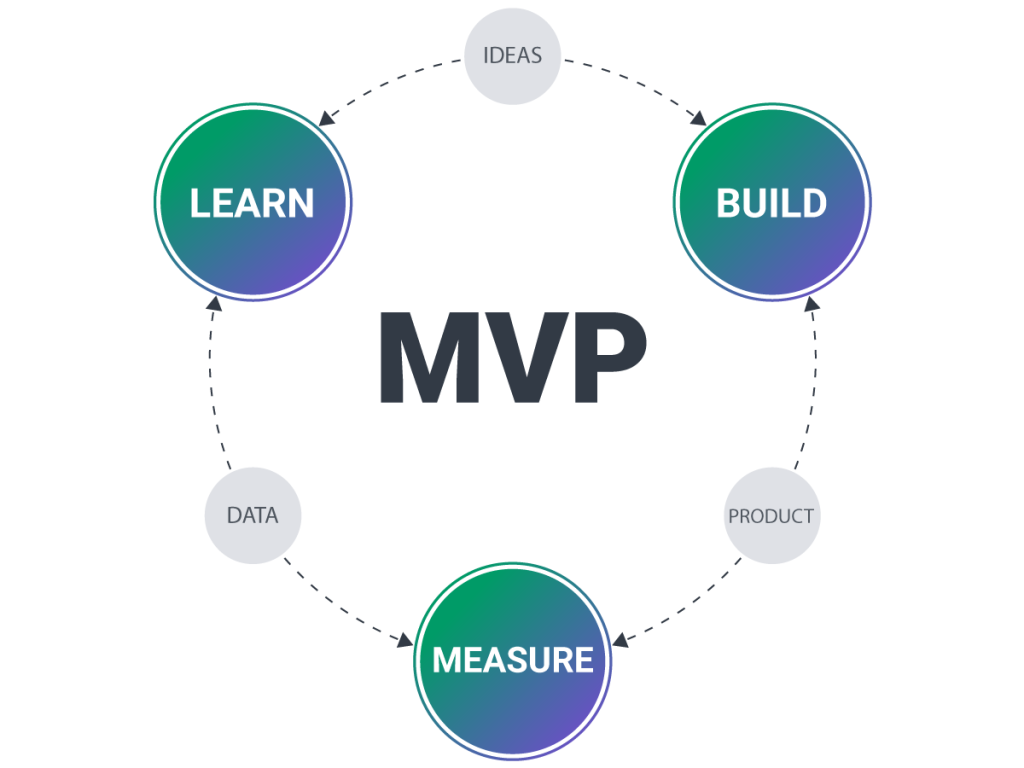
An MVP in software development stands for Minimum Viable Product. It is the simplest version of a software product that includes only the core features needed to solve a specific problem for users, instead of building a whole system at once.
The main goal of an MVP is to launch quickly, collect real user feedback, and improve the product based on actual market demand instead of assumptions. It is more than playing with real feedback and data.
Rather than spending years building a fully featured application, companies develop a basic version first. This approach minimizes risk and allows businesses to validate ideas before investing heavily in development.
For example, if you want to build a food delivery app, your MVP may only include:
- User registration
- Restaurant listings
- Order placement
- Basic payment integration
Advanced features such as AI recommendations, loyalty rewards, and real-time analytics can be added later after the initial feature works successfully.
What Is MVP in Business?
Many people ask, what is MVP in business beyond software development. In business strategy, MVP refers to testing a business idea with the minimum resources required instead of investing the whole at a time.
The concept helps companies answer important questions:
- Do customers actually want this product?
- Will users pay for it?
- What features matter most?
- Is the business model sustainable?
Instead of launching a perfect product immediately, businesses create a smaller version to validate market demand. This approach is especially valuable for startups working with limited budgets and tight timelines.
Popular companies like Airbnb, Dropbox, and Uber started with MVP strategies before becoming global brands.
Why MVP Is Important in Software Development
The importance of MVP in software development cannot be overstated. Building a complete software solution without validating the market often leads to wasted resources.
Here are the key benefits of using an MVP approach:
1. Faster Time to Market
An MVP allows businesses to launch products quickly. Instead of waiting months or years, companies can release a working version in a shorter period and start attracting users immediately.
2. Reduced Development Costs
Developing only the essential features lowers initial costs significantly. Businesses avoid spending money on unnecessary functionalities that users may never use, and that can be built later.
3. Real User Feedback
One of the biggest advantages of MVP development is gaining real-world feedback. Actual users help identify strengths, weaknesses, and opportunities for improvement in its initial phase.
4. Lower Business Risk
Launching a complete product without market validation is risky. MVP development helps businesses test ideas early and pivot if needed, and can work on the risky part in the next phase.
5. Better Investor Confidence
Investors prefer startups that validate ideas before scaling. A successful MVP demonstrates demand and increases credibility during fundraising.
Key Features of an Effective MVP
A successful MVP should not be confused with a poor-quality product. While it includes minimal features, it still needs to deliver real value.
An effective MVP usually has:
- A clear problem-solving purpose
- Core functionality only
- User-friendly design
- Basic but reliable performance
- Scalability potential
- Feedback collection mechanisms
The focus should always remain on solving one major problem exceptionally well.
Steps to Build an MVP in Software Development
Creating an MVP requires careful planning and execution. Here are the essential steps businesses follow:
1. Identify the Problem
Every successful software product begins with a problem worth solving. Start by understanding customer pain points and market gaps.
For example:
- Small businesses struggle with inventory management
- Freelancers need simpler invoicing systems
- Students require affordable learning platforms
The clearer the problem, the more focused the MVP becomes.
2. Define Your Target Audience
Knowing your audience helps prioritize features. Create user notes to understand:
- Customer demographics
- Behavior patterns
- Preferences
- Common challenges
Your MVP should address the needs of a specific audience rather than trying to satisfy everyone.
3. Research Competitors
Competitive analysis helps identify opportunities and weaknesses in existing solutions. Look at:
- Competitor features
- User reviews
- Pricing models
- Market positioning
This research helps differentiate your MVP from other products.
4. Prioritize Core Features
Feature prioritization is one of the most critical parts of MVP development. Focus only on the features necessary for solving the primary problem.
A useful framework is:
- Must-have features
- Nice-to-have features
- Future enhancements
Avoid feature overload during the early stages.
5. Build and Launch
Once the essential features are finalized, begin development and release the MVP to real users.
Modern technologies such as:
- React
- Node.js
- Flutter
- Laravel
- Python frameworks
can help accelerate MVP development.
6. Collect Feedback and Improve
After launch, gather insights from users through:
- Surveys
- Reviews
- Analytics
- Interviews
Continuous iteration is the foundation of successful MVP strategies.
Common Mistakes in MVP Development
Many startups misunderstand the purpose of MVPs and make avoidable mistakes.
Overloading Features
Adding too many features defeats the purpose of a minimum viable product.
Ignoring User Experience
Even simple products need an intuitive design and smooth usability.
Lack of Market Research
Without proper research, businesses risk building products nobody wants.
Poor Scalability Planning
An MVP should be simple but capable of future growth.
Avoiding Feedback
User feedback is the most valuable asset during MVP development.
MVP vs Full Product Development
Understanding the difference between an MVP and a complete product is important.
| MVP | Full Product |
|---|---|
| Limited features | Advanced functionality |
| Faster launch | Longer development time |
| Lower cost | Higher investment |
| Focused validation | Market expansion |
| Early user feedback | Mature user experience |
An MVP is the first step toward a larger software ecosystem.
Real-World Examples of MVP Success
Dropbox
Dropbox started with a simple explainer video instead of a fully developed platform. The response validated demand before extensive development.
Airbnb
Airbnb’s founders initially rented out air mattresses in their apartment through a basic website.
Facebook originally launched only for Harvard students before expanding globally.
These examples demonstrate how MVP strategies help businesses grow sustainably.
How MVP Helps Startups Scale Faster
Startups often face budget limitations and uncertain market conditions. MVP development provides a smarter path to growth by enabling:
- Faster experimentation
- Better customer understanding
- Improved resource allocation
- Agile product evolution
Instead of building massive systems upfront, startups can scale based on real market needs.
Future of MVP in Software Development
As technology evolves, MVP methodologies continue to become more agile and data-driven. Trends influencing MVP development include:
- AI-powered analytics
- No-code and low-code platforms
- Cloud-native architecture
- Rapid prototyping tools
- Automation-driven testing
Businesses that adopt MVP strategies can innovate faster and stay competitive in dynamic markets.
Conclusion
Understanding MVP in software development is essential for businesses aiming to build successful digital products efficiently. An MVP helps companies validate ideas, reduce risks, save costs, and gather valuable user feedback before full-scale development and entering the big market.
Similarly, understanding what is MVP in business is allows entrepreneurs to test business concepts with minimal investment while maximizing learning opportunities from the features.
Whether you are launching a startup app, SaaS platform, or enterprise software solution, MVP development provides a practical framework for long-term success. Instead of chasing perfection from day one, businesses should focus on solving real problems, learning from users, and evolving continuously.
In the modern digital economy, the companies that succeed are often the ones that launch early, learn quickly, and improve consistently through the MVP approach.